Tech Notes: Currency and E-Payments

Last time, I spoke about newspapers and how we are slowly, but surely, evolving to the elimination of the printed newspaper as we know it. One day, it will be a thing of the past as new subscribers go with electronic editions of their preferred newspapers.

In continuing with that trend, I’d like to talk about my thoughts on where we are headed with what we all do, sometimes daily. Paying for things. Whether it be for services or products, technology is making it convenient enough to pay for things without even having to reach into our pockets. Is it really worth it? Of course, as with most things, there’s always a risk and sometimes a price to pay with greater convenience.

Continue reading “Tech Notes: Currency and E-Payments”

Tech Notes: Grab your Coffee and E-Paper

I don’t mean to start this blog off on a morbid tone, but I just discovered a website, newspaperdeathwatch.com, that is devoted to reporting when Newspapers announce that they are discontinuing the printing of “hard copy” papers and going to a strictly online-only version.  A soft of “online graveyard” of newspapers.  Kinda sad, but in 2017, newspapers, and news in general, are definitely at a crossroads.

The Rocky Mountain News was one of the first papers to go all-in on “online only” and that was nearly 8 years ago.  Since then, lots of other newspapers have seen their demise.  These companies are placing high importance on their bottom lines and deciding to evolve their entire business.

If you ever think that your newspaper of choice will soon one day make this decision, then it’s time you evolve your own way of thinking and start learning how to read your newspaper digitally.  Here are some pointers that I have learned to help you with what is known as “E-Reading”.

Continue reading “Tech Notes: Grab your Coffee and E-Paper”

Tech Notes: USB 3.0 – Coming to a Computer Near You

Chad Droze Tech Notes header SAVE

I’ve been working in the tech industry for a little over a decade.  Now, that may not be much in human years, but in tech years, that’s a long time.  In fact, if you own any type of electronic device like an old computer, typewriter, Palm Pilot, Blackberry, original iPod, keep them handy.  Maybe one day some vintage collectors will want to buy it for nostalgic purposes.  These things could go into the Computer “Hall of Fame” one day.  Look at this dinosaur below!

droze-1-mar-2017

Well, pretty soon, there’s another change coming to most computers. You see, In technology, it’s all about evolution. Things evolve. Phones get faster. Laptops get thinner. Televisions are so thin now that one day they will probably be the thickness of a sheet of paper. Most evolution in the tech world means things progress and get better and easier to use. (In the future, maybe we can discuss how some changes are actually a regression.) Continue reading “Tech Notes: USB 3.0 – Coming to a Computer Near You”

Tech Notes: Managing those Pesky Passwords

Chad Droze Tech Notes header SAVE

Hello Seabrookers. I hope everyone is having a great start to their 2017.

Every new year sees new innovations in technology, and I intend to share and discuss these topics, but, today I want to start off a problem that I think all of us deals with all the time. PASSWORDS! We all have them. We all need them. And, of course, we all are aware that nowadays are passwords must contain at least one letter, one number, one symbol…..you know the drill. How are we supposed to remember them all, when security experts recommend that all of them should be different from each other? In today’s post, I’ll discuss some ways.

First off, a strategy that I use is something I call a “Go-To” password. What do I mean about this? There are websites on the internet that you need passwords for that aren’t really that high-risk to your identity. Websites like Pandora (music), Netflix (movies) – pretty much anything that isn’t related to email, banking, financial data, or social networks – are websites that I think you could use the same “Go-To” password for. The great thing about a “Go-To” password is that you don’t need to look it up. It’s something that’s ingrained in your head. You are asked to login, you type in the password from rote memory, and you’re logged in.

Continue reading “Tech Notes: Managing those Pesky Passwords”

Tech Notes: Staying Safe Online (Part 3 of 3)

Chad Droze Tech Notes header SAVE
Read Part One of “Staying Safe Online” Here
Read Part Two of “Staying Safe Online” Here

We’ve been talking about ways to spot out Phishing Attempts that may try to bait you either through e-mail or on the Web. I’ve talked to many people on the island – many of them have been my customers for years – who have informed me that they got fooled. They felt embarrassed to even admit it. Some of them fell for the bogus phone call scam. That is, someone (usually from overseas) calls and claims to be a representative from Microsoft, Windows, Apple, Dell, HP, Norton, etc.

First things first – NEVER fall for the phone call scam. It’s always bogus. 100% of the time. No legit company will ever call you about YOUR computer. They usually are hoping to catch you in a moment of weakness and bait you into letting them control your computer. They will then proceed to show you bogus information about your firewall, or antivirus program, or your computer’s hidden “errors”. This is a scare tactic. Once they proceed to scare you, that’s when they ask for the money. If you still went against better judgement and gave them any banking or credit card information, you MUST call your bank or credit card company immediately. Tell them what happened. These companies have fraud departments that are quite busy these days. They will stop payment and try to thwart the bad guy’s attempt to steal your money. They will probably issue you another credit or debit card as well. You must do this quickly though.

After this has been done, you must to run a malware scan on your computer. Even if it wasn’t the phone scam trick you fell for, this is a necessity to make sure to remove any malicious and unauthorized software that may be lurking on your system. Both Mac and PC Desktops and Laptops are vulnerable to this. Phones and Tablets are not usually able be infected (however, their days may be limited as hackers and bad guys start figuring out how to penetrate these devices).

Malware Dec 2016
The software we like to use for detection and removal of malicious software is MalwareBytes. We’ve been using it for over 10 years. It does the best job, in our opinion, of cleaning and ridding your system of the bad stuff. You can download it at www.malwarebytes.org . The free version is good (you must run each scan yourself), but why not spring for the $25/year version. The paid version runs quietly in the background and checks incoming connections to better stop and prevent infections coming into your system.

When you run MalwareBytes, the “Quick Scan” inspects common areas that malware likes to hide out, but if you have a major infection, you may want to do a Custom “Full Scan” to scan every part of your system.

Know Your System

The last piece of advice I’ll give is just to keep an eye on your system. By this, I mean look at your icons and familiarize yourself with them. If you do this, you can better spot out a malicious program if it somehow happens to sneak into your system. When customers come and visit me, I sometimes see a desktop that looks like this:

Icons Dec 2016

I know right away there is an issue. Firefox, of course, is a common web browser, but when you see new icons like the above “PC Speedup-Pro”, you should know right away that you didn’t authorize this new program so you should go to the computer Control Panel and uninstall the software and also run a MalwareBytes scan.

Stay Safe & Happy Surfing!

-Submitted by Chad Droze
http://www.compu-experts.com
http://www.twitter.com/c0mpuexperts

Tech Notes: Staying Safe Online (Part 2 of 3)

Chad Droze Tech Notes header SAVE

7-spotting-out-phishing-attempts

Read Part One of “Staying Safe Online” Here

Today I will be discussing things to look out for when surfing the web. As you remember, we discussed how to spot out “Phishing” emails in our last discussion. E-mail has been an easy target for many years, but the bad guys are also very prevalent on the web. Here are some things to keep a watchful eye on when surfing the web.

Always Keep an Eye on the URL

droze-eye-on-url
Anyone can steal logos, color schemes, and other images to make a site look like the real thing. In any browser on any device, there is always the address bar usually at the top of the screen. If you suspect anything, check the URL to make sure it contains the real .COM address. In the Facebook example above, while the URL does contain the word FACEBOOK, the main address is really a bogus .CO (not .COM) address. It’s not necessarily that the site uses a .CO domain, but what’s sits before it is what really sticks out like a sore thumb.

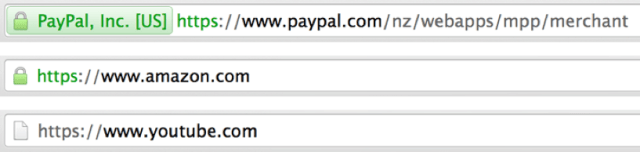
Look for the https:// or Lock Symbol when Signing In
droze-lock-symbol

When logging into most major websites, they use security encryption called HTTPS. Look for this in the address bar as well. Before you login, make sure you see this, or else be suspicious. And ask yourself – “How did I just get here?”. If you clicked in an email or a link from another site, then maybe you clicked on a bad link – there’s always that possibility. If you got to the website by clicking your favorites or saved bookmark, then you’re probably okay. The safest way to always get to the true website you are intending to visit is by typing in it’s web address (URL) into the address bar directly. URL’s are the equivalent of our Street Addresses.

Here’s a real life example. 121 Main Street is a different address than 112 Main Street, correct? Well google.com is different than goggle.com (TYPO!). Goggle.com may have been purchased by a scammer to catch those who type Google incorrectly. Don’t try going to the goggle.com to see I’m correct. My point is, be careful and mindful of incorrect addresses!

Watch for Ads that lurk on the edges of websites. They could lead you in a bad direction.

droze-watch-for-ads

At first glance, this may seem like your computer is telling you to update Adobe Flash, which is a legitimate program that your computer uses to display video and graphics on websites (Java is another). But definitely watch out for this one. This one is very prevalent out there on the web (especially when clicking through to links from Facebook). Note the use of ALL CAPS and the RED WARNINGS and the nicely colored GREEN DOWNLOAD FREE button. All an attempt to get you to click through and download this “fake” Flash program.

If this happens to you, you may have just gotten infected. Try to go back immediately. Click the X in the top corner. Leave – Go away – whatever it takes. If you must, shut down your device by pressing the power button. The longer you stay, the more infections you may be letting in. (NOTE: Stay tuned to part 3 of this series to find out how to remove an infection.) On this example, they clearly stole or made a very similar Adobe Flash logo. If you really want to update your Adobe Flash, then go to adobe.com directly in your address bar.

Facebook

Let’s talk about this for a moment since many of us now browse Facebook on a daily basis. For one, don’t fall for the “Facebook is going to start charging its users if you don’t do this……yadda yadda yadda” scam. Just ignore it. Facebook has never charged it’s users, and never will. Also, be careful about the “Free Stuff” or Coupons that you may see on Facebook and other social media sites. Now, companies to promote their products and services to Social Media and in many cases do offer free coupons to those who share or promote the product, but just use common sense. It’s always a good idea to use the “If it looks too good to be true, it probably isn’t” mentality when dealing with these things. Also, watch out for surveys and quizzes that you may see on Facebook. Again, there are legitimate ones out there, but if one of them wants to install “this or that” before you do it, you should probably just back away.

Clickbait

droze-clickbalt

This one is a relatively new term out there on the Internet. In fact, I just went to Google and asked “is Clickbait bad”. I read some sites out there but really couldn’t find a definitive answer. So, I put this one out there just to make you aware of how to spot it. To me, clickbait is like those sensationalized magazines that I would see at the checkout counter about “Man Gives Birth” or even the Enquirer Headline grabbing magazines. They can appear on legitimate websites but I’ve always noticed that each one tends to grab your attention the same way. For instance, it may say “6 Weird Diet Tricks that Doctors Won’t Tell You”. They just make me stop and think for a second. I’ve clicked on a few of them recently and while I did not get a virus, it just looked suspicious to me. I don’t really know yet what the true intent of these are, but perhaps they do have other motives.

In Part 3, we’ll talk about what to do in case you do fall prey to one of these tricks. Don’t worry, you’re not alone!

-Submitted by Chad Droze

www.compu-experts.com

www.twitter.com/c0mpuexperts

Tech Notes: Staying Safe Online Part One

This will be the 1st of a 3-part topic about an inevitable problem that any of us who use the computer will face at one point or another.  It’s called Phishing.  It’s a new word in today’s lexicon and there are numerous types of attempts to compromise your personal data.  Unfortunately, in an unregulated internet, there will be bad people out there trying to take advantage of unsuspecting users and catch them off guard.  They hope that one small slip by you the victim will give them what they need to gain what they want.  No matter what their intent is, their end game is usually all about making money in the sneakiest of ways.

Law enforcement is doing more and more these days to prevent and prosecute those who enact cybercrimes and attacks, but staying safe always starts with you the user.  Here are some quick tips for staying safe online.  You’ll never be 100% protected online, but these tips can lower the probability of becoming a victim of a cyber-attack. Continue reading “Tech Notes: Staying Safe Online Part One”

Tech Notes: The New Era of Television (Part 3 of a 3)

droze-headerRead Part 1 Here

Read Part 2 Here

So, this is the final part of my 3 Part Blog on Streaming Video, Cord Cutting, Smart TV’s and all the jargon that goes along with it. Hopefully you’ve read and decided if cord cutting is something that will work with your viewing lifestyle. Maybe you feel like it’s too early to make such a drastic change. That’s OK – like I mentioned in Part 1, it took me over a year to finally pull the trigger, and I’m still not entirely sure if my decision was the right one or not.

In this post, I will talk about the various services that exist that will allow you to stream the various content you are interested in. I’ll give a brief description of each along with a link to their website for more information.

-Netflix (www.netflix.com) – Probably the most popular streaming service out there. At around $10 per month, Netflix has 1000’s of movies- not really new releases though – it takes time for a new movie in theaters to eventually make it to Netflix. And Netflix adds content every month (and sometimes takes content away for a period of time). For TV Shows, it’s important to note that they have past seasons of TV shows, not current seasons (for current seasons, read about Hulu in the next paragraph). Netflix also has original programming which makes it a popular choice. If you’ve heard of “House of Cards” or “Orange is the New Black”, then you’ll only find those original shows on Netflix. No live programming on Netflix. Continue reading “Tech Notes: The New Era of Television (Part 3 of a 3)”

Tech Notes: The New Era of Television

droze header SAVE

“THE FUTURE OF TV IS APPS” – that’s what Apple’s Tim Cook has famously said in one of Apple’s annual Keynote Speeches that they give to introduce one of their new products. Last time I introduced the term “Cord Cutting” and how you may consider it at some point down the road. No matter if you plan on cancelling cable entirely, or just gradually phasing it out, if you want to stream television and video, you’ll need something to stream it with. Now, our smartphones and tablets are already set to stream (using the various apps and services that I’ll talk about next time), but I’m sure you and your family aren’t planning on gathering around a small screen and sitting on top of each other to watch a Netflix movie. So, how to we stream to our gigantic 50+ Inch Televisions. Well, there are a few ways.

Continue reading “Tech Notes: The New Era of Television”

Celia’s Recipe of the Month: Pasta all’Amatriciana

header celia recipe

Popular TIDELINES columnist Chef Celia Cerasoli has sent us this month’s recipe for her Daddy’s Pasta all’Amatriciana.

In remembrance of the town of Amatrice that was devastated by last week’s earthquake, Celia wants to share her Dad’s favorite recipe, which comes from this town on the outskirts of Rome.

As disaster struck this medieval town, they were preparing for the festival commemorating this delicious dish. Tradition calls for quanciale, or pork jowl, but pancetta, which is easier to use, also works. Although this dish is usually made with spaghetti or buccatini, she prefers short pasta… especially “rigate” which helps hold the sauce.

Download the recipe here:  Daddy’s Pasta all’Amatriciana.

-Tidelines Editor


Daddy’s
Yields 4-5 servings


In remembrance of the town of Amatrice that was devastated by last week’s earthquake, I want to share my Dad’s favorite recipe, which comes from this town on the outskirts of Rome.

As disaster struck this medieval town, they were preparing for the festival commemorating this delicious dish. Tradition calls for quanciale, or pork jowl, but pancetta, which is easier to use, also works. Although this dish is usually made with spaghetti or buccatini, I prefer short pasta… especially “rigate” which helps hold the sauce.

Tech Notes: The New Era of Television (Part 1 of a 3-Part Blog Post)

droze-header.png

I can only imagine what it was like back in the 1950’s and 1960’s when the American family purchased their first television set. Black and white video, big antennas, big fat tube tv sets, a fuzzy picture- I wonder if anyone knew back then how it would change the world. Families gathering around watching a wholesome television show like “Leave it to Beaver”, or maybe witnessing history like the Apollo 11 Moon Landing or the Beatles debut on “The Ed Sullivan Show”. Television has certainly changed our lives. Over time, it has gradually evolved and adapted but the past few years have seen a decline in traditional TV service.

images

TV has changed because the average family has changed. Mom and Dad work different schedules, Brother doesn’t want to watch the same show that Sister watches. Sister has her own TV in her own room. Whatever the case may be, the average family doesn’t sit around the television like they did 40 or 50 years ago. Everyone’s on the go, staring at their tablets and phones watching the latest viral video. Our attention spans are shorter, demanding for video that we can start and stop as we please, as well as watch it on whatever device we happen to have handy.

I recently canceled my Cable TV service. I pondered doing this for at least a year before deciding to cut it altogether. My decision was based primarily around the rising cost of my monthly cable bill. Of course, you can call and threaten the cable company, and they may work with you, but I had read and done research on all these streaming video services that are cheaper, no contracts, and have a broad range of various programming that I can watch on my schedule.

I’m going to attempt to lay out all the various services and devices that exist that the cable companies hate to hear about because it means more “cord cutters” – those who have cancelled their traditional satellite or cable based TV service and watch their television streaming via the internet – are ditching their cable bills and thus the big cable giants are losing money. This post will discuss what to consider when thinking about cutting the cord. The next post, probably in a week or two after this one is published, will focus on the different devices that can stream television and video and finally, the final post will focus on services that stream various content and the costs, advantages, and disadvantages of each of those services. Continue reading “Tech Notes: The New Era of Television (Part 1 of a 3-Part Blog Post)”

Change Your Story to Create a New Habit: The Transformative Power of Using Your Inner Voice to Your Advantage

goyer header SAVEChange Your Story to Create a New Habit

The transformative power of using your inner voice to your advantage

Have you ever tried to adopt a new healthy habit but failed miserably? Most likely you were telling yourself a story that sabotaged your efforts.

Whenever we attempt to form a new habit, we tell ourselves a story about it. Think of a habit you have been trying to form or that you’ve failed at creating in the recent past — maybe exercising regularly, meditating, defeating procrastination, eating better, drinking less, etc. Now think about the story you told yourself when you began. What image did you see in your mind? Did you imagine yourself “crossing the finish line triumphantly” after overcoming all obstacles? Or did you tell yourself that this was going to be difficult and probably would not work?

We fail at creating new healthy habits because of the stories with which we saddle ourselves. They stand in our way, more than the actual bad habit we’re trying to replace. When things get tough or uncomfortable, we tell ourselves tales like: “It doesn’t matter, we don’t deserve it anyway, we’re not disciplined enough, we stink at this, we can’t do it, it’s too hard, life is too short to struggle, just one more won’t hurt in the total scheme of things”, blah, blah, blah, no new habit…

The truth is that what you think about and speak about come about (positively or negatively). Stories are powerful. They reflect your inner voice — in other words what you have come to believe. They can keep you stuck for a lifetime or they can inspire you forward to new heights. The trick when you have made a decision to embark on a new habit is to arm yourself with a positive and plausible story. Here is a process to follow:

• Begin by getting very clear in your mind why this new habit is important to you. How will it enhance your life? If you want to stop procrastinating for instance, how much more pleasant will your life be? Focus on the end result and be able to conjure that image in your mind.

• Find things to appreciate about the new habit and savor the successes along the way. Consider how you feel about yourself when you are using your new habit. “I am proud of doing this. I am learning a lot. I am appreciating the little things about this habit. This habit is improving my life in multiple ways.” All of these statements add vivid detail to your story.

• When your inner voice starts spewing out negative aspects of the new habit, acknowledge it and then pivot. Say something to yourself like, “ Well clearly I don’t want to feel that way. What do I want instead?” This is where you go back to your story and the positive feelings that you have accumulated about the new habit.

If your story is on balance more positive than negative, you’ll be more resilient and you will be able to handle the negative stuff with grace. That will make all the difference; not only will you want to stay with the habit longer, you’ll enjoy it more each time you do it.

April Goyer is life coach, health coach and personal trainer. She provides a complimentary consultation to help you gain a fresh perspective on everything you have at your disposal to lead a strong, healthy life. You can reach her on her cell at 614-893-8519 at april@aprilgoyer.com

-Submitted by April Goyer